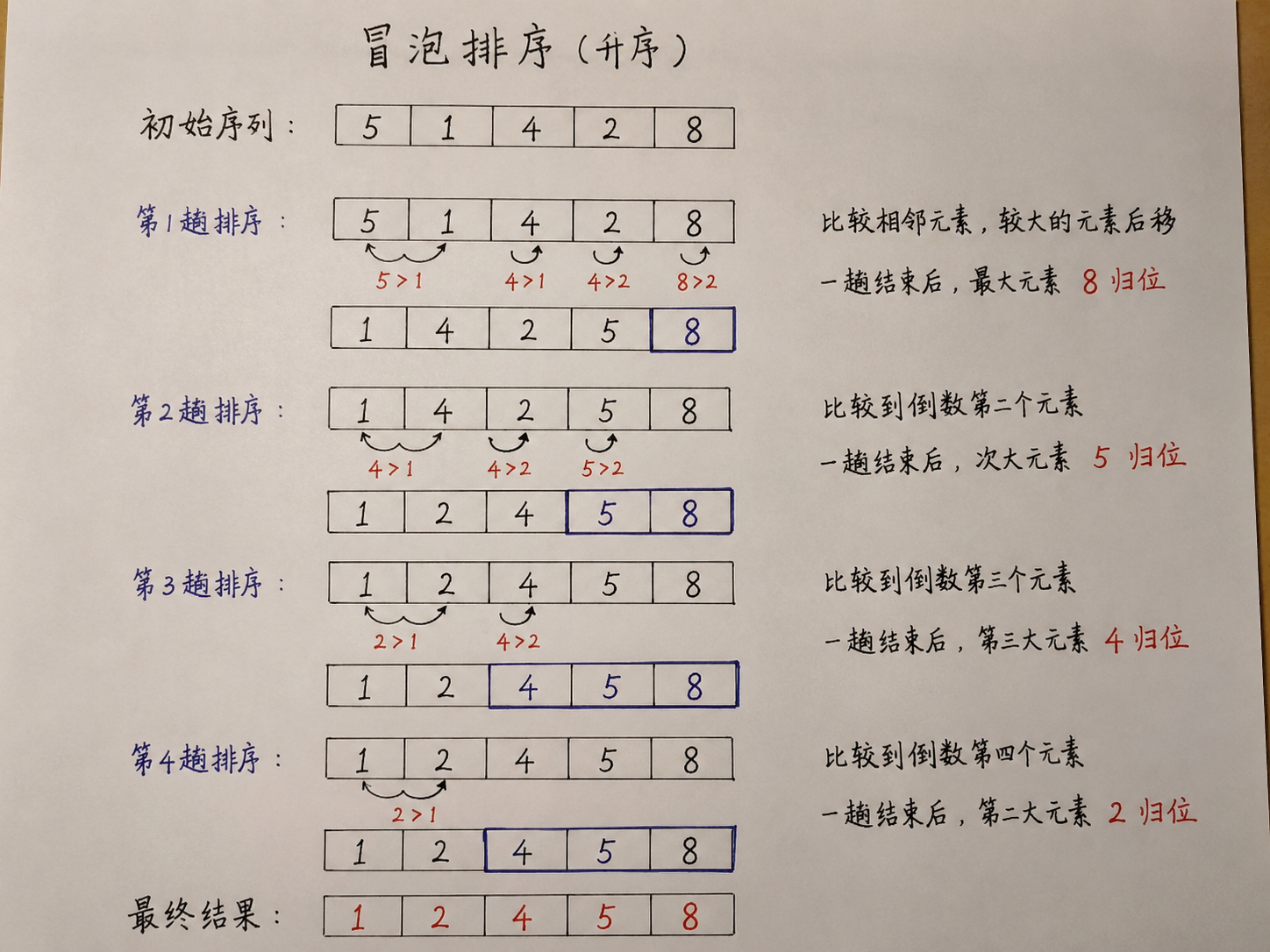
冒泡排序

alt text

1
2
3
4
5
6
7
8
9
10
11
12
13
14
15
16
17
18
19
20
21
22
23
24
25
26
27
28
29
30
31
32
/// Sort a slice using bucket sort algorithm.
///
/// Time complexity is `O(n + k)` on average, where `n` is the number of elements,
/// `k` is the number of buckets used in process.
///
/// Space complexity is `O(n + k)`, as it sorts not in-place.
pub fn bucket_sort(arr: &[usize]) -> Vec<usize> {
if arr.is_empty() {
return vec![];
}

let max = *arr.iter().max().unwrap();
let len = arr.len();
let mut buckets = vec![vec![]; len + 1];

for x in arr {
buckets[len * *x / max].push(*x);
}

for bucket in buckets.iter_mut() {
super::insertion_sort(bucket);
}

let mut result = vec![];
for bucket in buckets {
for x in bucket {
result.push(x);
}
}

result
}

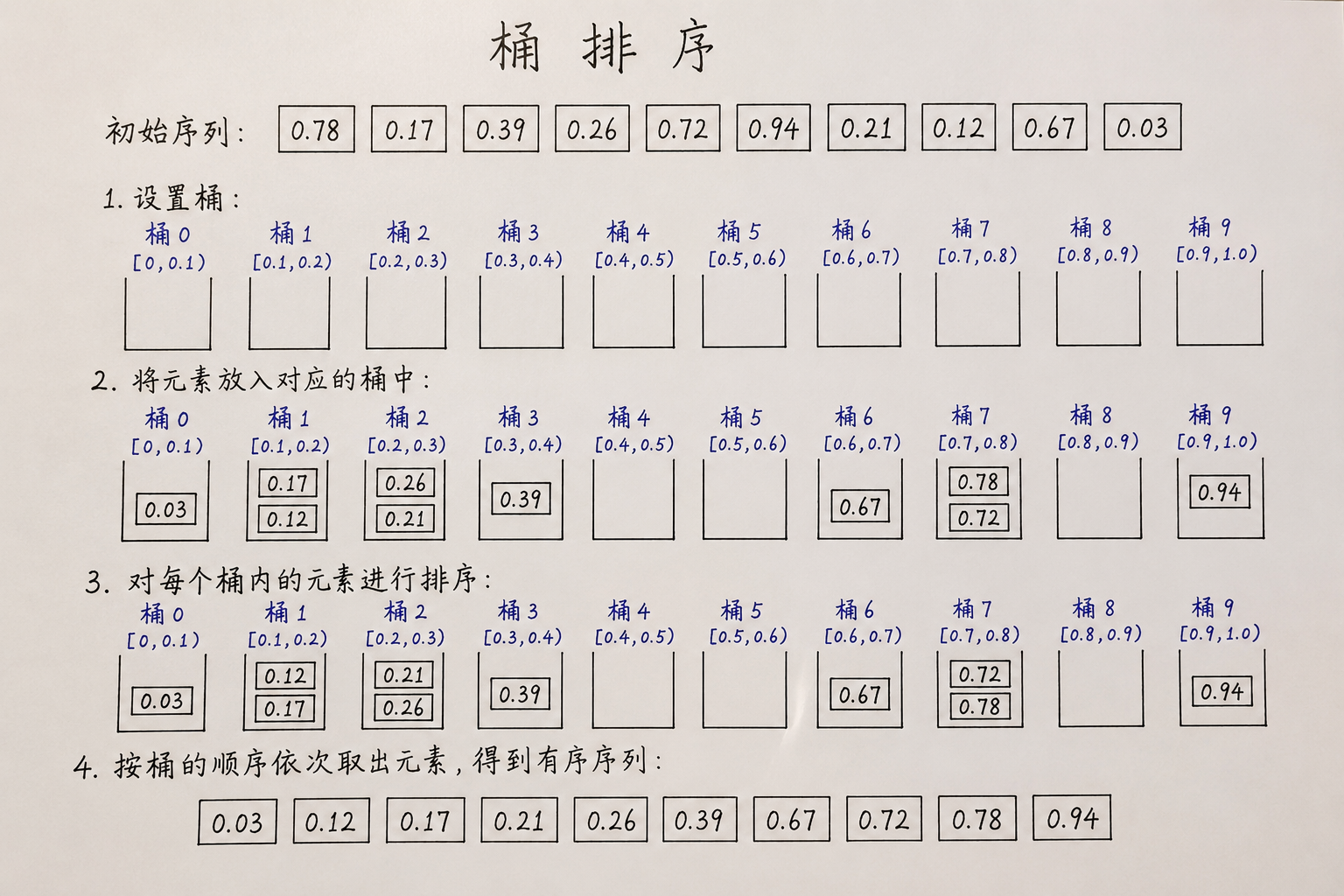
桶排序

alt text

1
2
3
4
5
6
7
8
9
10
11
12
13
14
15
16
17
18
19
20
21
22
23
24
25
26
27
28
29
30
31
32
33
34
35
36
37
38
39
40
41
42
43
44
45
46
47
48
49
50
51
52
53
54
55
/// Sort a slice using bucket sort algorithm.
///
/// Time complexity is `O(n + k)` on average, where `n` is the number of elements,
/// `k` is the number of buckets used in process.
///
/// Space complexity is `O(n + k)`, as it sorts not in-place.
/// 插入排序,用于对各个桶内部进行排序
fn insertion_sort(arr: &mut [usize]) {
for i in 1..arr.len() {
let mut j = i;
while j > 0 && arr[j - 1] > arr[j] {
arr.swap(j - 1, j);
j -= 1;
}
}
}

/// 桶排序函数
pub fn bucket_sort(arr: &[usize]) -> Vec<usize> {
if arr.is_empty() {
return vec![];
}

let max = *arr.iter().max().unwrap();

// 如果最大值为 0,说明数组中所有元素都是 0,直接返回即可
if max == 0 {
return arr.to_vec();
}

let len = arr.len();
// 创建 len + 1 个桶,防止 len * max / max = len 时越界
let mut buckets = vec![vec![]; len + 1];

for &x in arr {
// 计算当前元素应该放入哪个桶
let index = len * x / max;
buckets[index].push(x);
}

// 对每个桶进行排序
for bucket in buckets.iter_mut() {
insertion_sort(bucket);
}

// 收集排序后的结果
let mut result = Vec::with_capacity(len);
for bucket in buckets {
for x in bucket {
result.push(x);
}
}

result
}

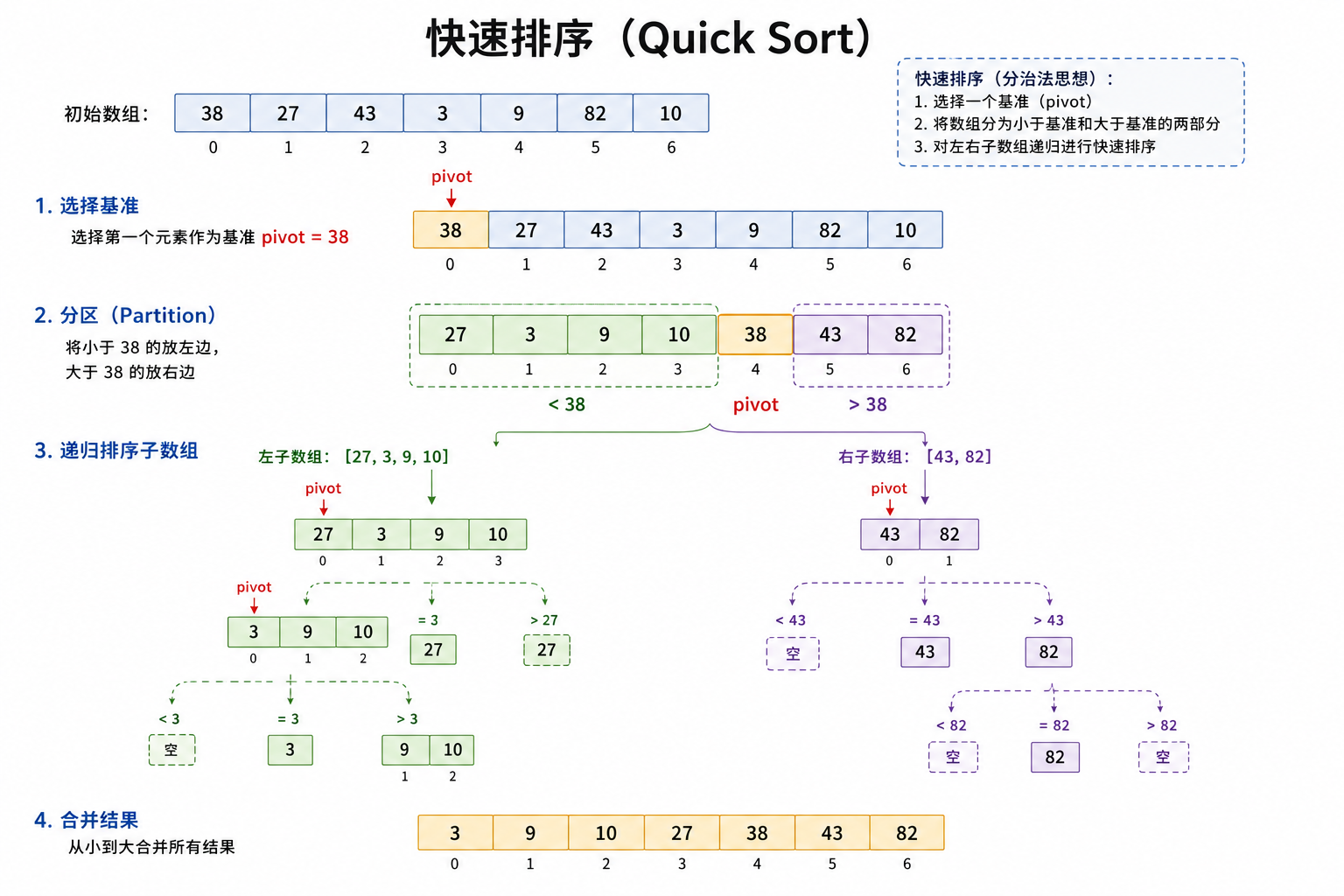
快速排序

alt text

1
2
3
4
5
6
7
8
9
10
11
12
13
14
15
16
17
18
19
20
21
22
23
24
25
26
27
28
29
30
31
32
pub fn quick_sort<T: Ord>(arr: &mut [T]) {
if arr.len() <= 1 {
return;
}

// 获取分区点的索引
let pivot_index = partition(arr);

// 递归对分区点左侧和右侧的子数组进行排序
// 注意:pivot_index 处的元素已经处于正确的位置,不需要参与后续排序
quick_sort(&mut arr[0..pivot_index]);
quick_sort(&mut arr[pivot_index + 1..]);
}

/// 分区函数(Lomuto 分区方案)
/// 选择数组的最后一个元素作为基准值(pivot),并将小于等于基准值的元素移到左边
fn partition<T: Ord>(arr: &mut [T]) -> usize {
let len = arr.len();
let pivot_index = len - 1;
let mut i = 0; // 记录小于等于基准值的元素的边界索引

for j in 0..pivot_index {
if arr[j] <= arr[pivot_index] {
arr.swap(i, j);
i += 1;
}
}

// 将基准值交换到其最终的正确位置
arr.swap(i, pivot_index);
i
}